The H.O.M.E. Course: Foundations
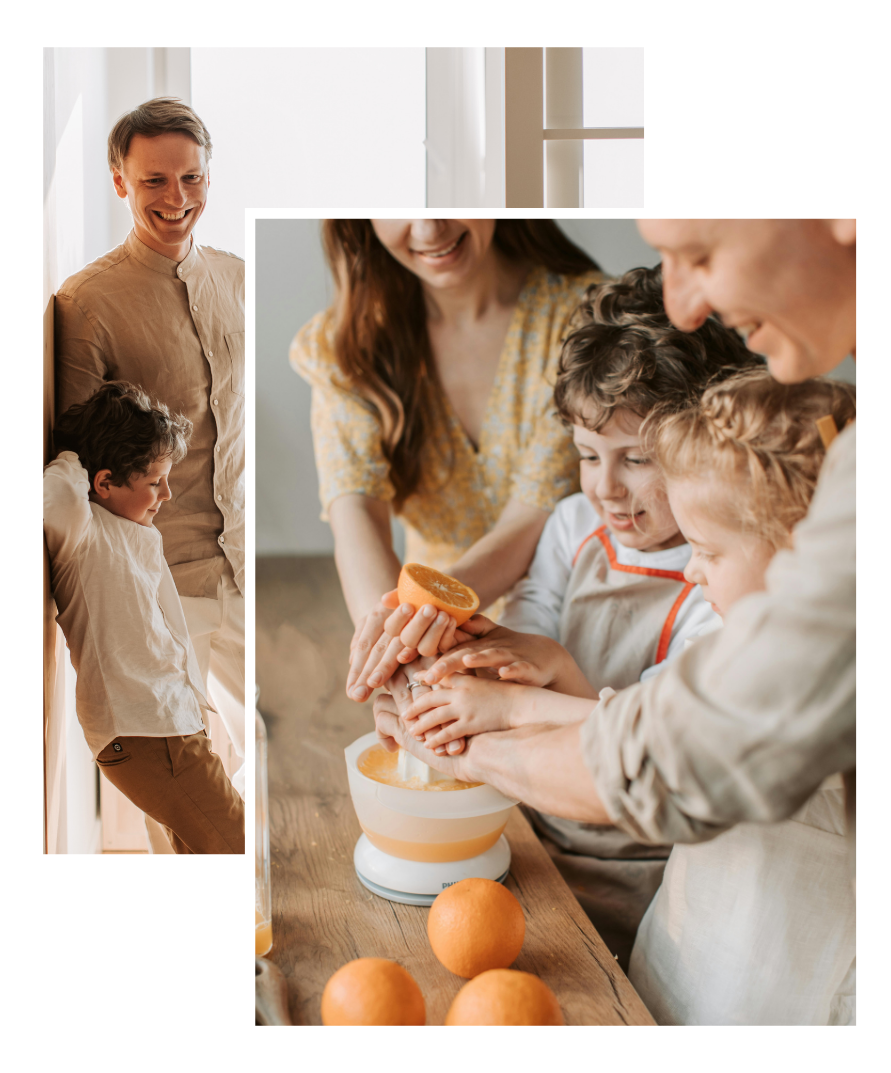
SOMETHING DIFFERENT IS POSSIBLE
your house isn't disorganized. It's understaffed
You know which child outgrew which shoes and in what order. You know what day the permission slip is due, who needs the blue shirt washed by Thursday, and where the good scissors actually are. Nobody else in the house knows any of it, so every question comes to you, and nothing starts until you answer.
This is your invitation to build your household differently, from the inside out.
In six weeks your family can operate differently, feel differently, and become capable of experiencing ordinary magic.
JOIN THE OCTOBER COHORTBuild a house that builds your kids. And you.
The H.o.m.e. course: Foundations
Six Weeks. Live. Starts October 5th.
Your children stop waiting to be told what to do and start taking ownership.
It’s not another to-do list. It’s a family system that sticks.
WHy home is harder than work.
You’re the only person in the building with a job description.
You lead teams. You manage projects. You make high-stakes decisions every day.
So why does running your home still feel harder than all that combined?
Because most families are operating without a system.
At work, people have roles. Nobody asks you who is covering the schedule, because someone has that role and everyone already knows who.
At home there are no roles. There is only whoever notices first, and for years that has been you. It is why every question comes back to one person, and it is why handing something over feels harder than doing it yourself: explaining takes longer than doing, every single time, right up until the day it doesn't.
My fourteen-year-old owns our photos. She pulls them off everyone's phones, sorts them, builds the memory books, and keeps the Skylight current. It is a real role and she is better at it than I was. I did not hand her a chore. I handed her a part of the house.
This is for you if…

You are competent everywhere else and cannot work out why this is the thing that beats you.
You have read the books about morning routines and noticed that none of them were written by somebody responsible for keeping another human alive at 3am.
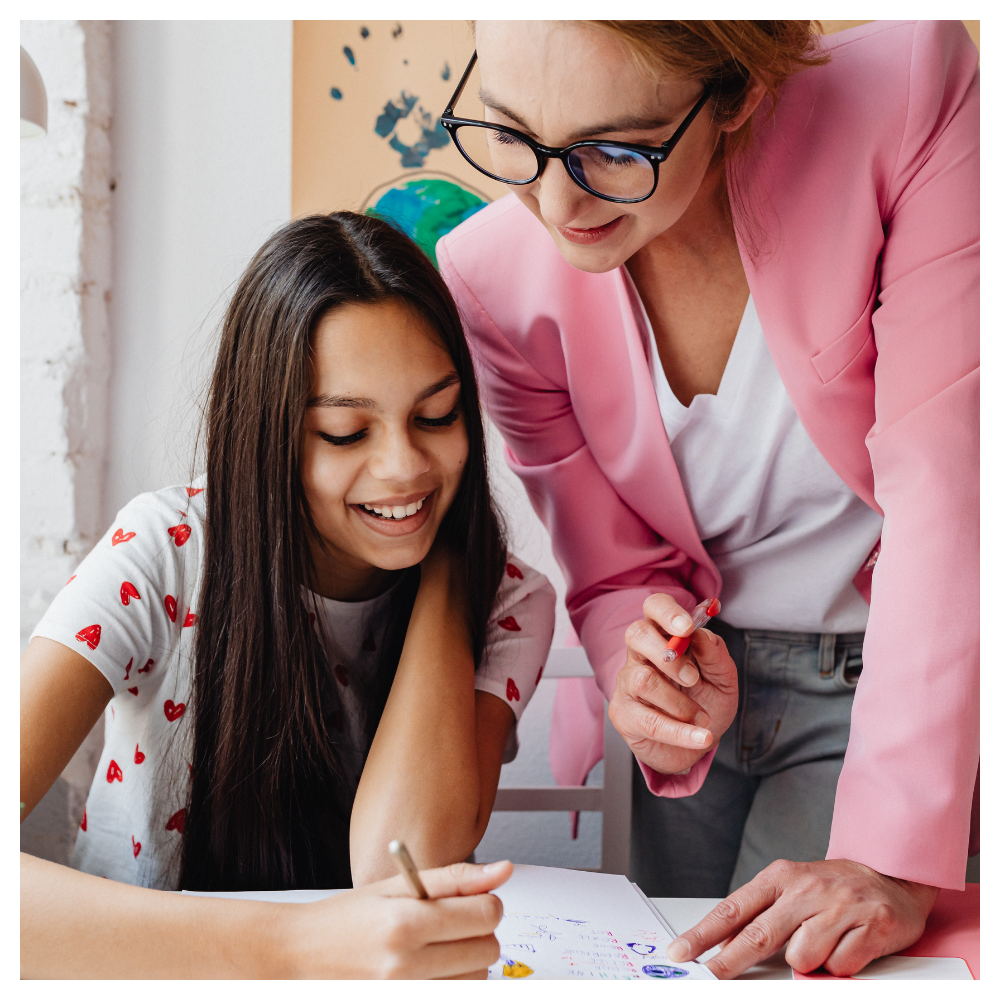
You do not want a chore chart. You want your children running real parts of the house.



what you build, week by week.
Six weeks.
Six things you will have
that you do not have now.
The research on resilient children is unglamorous. It says capability comes from ordinary conditions repeated over and over, not from big interventions. The developmental psychologist Ann Masten called it ordinary magic. What you are building here is a household that produces those conditions on an ordinary day.
At the end of six weeks:
Week one. What your family values, and what those values look like on a random Tuesday, in between soccer and dance practice.
Week two. The real roles in your house, distributed.
Week three. Deciding what signals are important and how to keep your family on track...without the nagging.
Week four. Tools to keep this easy, fun, and put your kids in charge.
Week five. Now that you can breathe, who are you becoming?
Week six. The weekly rhythm that keeps it all going.
HERE'S WHAT YOU'LL GET
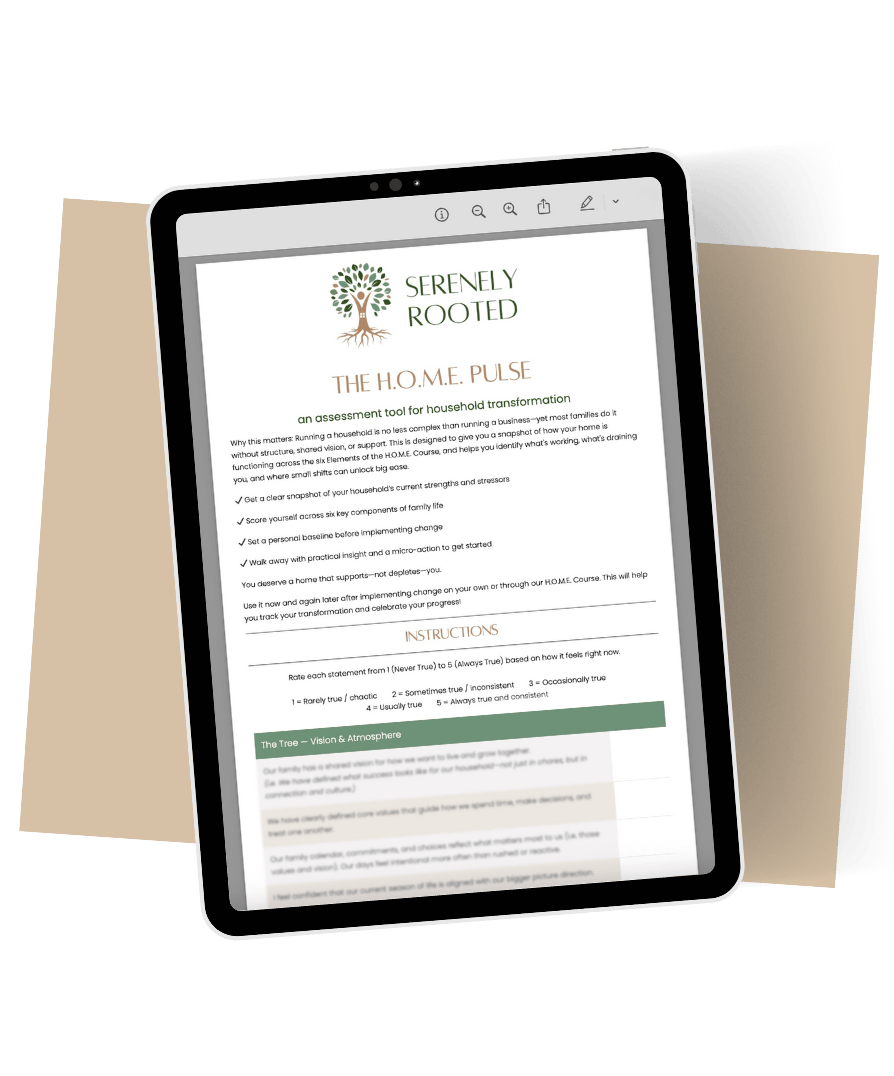
tools. support. community.
Six weeks of short lessons that walk you through each element of The H.O.M.E. Course: Foundations.
A complete workbook and ready-to-use templates to design and document your home systems.
Simple, real-life tracking tools to keep routines, roles, and rhythms flowing — even on the weeks that don’t go to plan.
Guided conversation prompts and hands-on materials that help your family share ownership, stay aligned, and ditch the daily nagging.
Lifetime access to all lessons and materials, so your systems can grow right alongside your family.
Live group sessions throughout the course for workshops, Q&A, additional content, and more!
A private community where you can ask questions, share wins, and learn alongside other families building calmer, more connected homes.
Fall season begins October 5.
$997
Enroll by September 30 and get a complimentary 30-minute 1:1 quick-win session.

Your household is raising them either way.
this is what decides what it teaches them.
Six weeks from now, either your household runs on a written plan
or you are still the only person who knows where anything is.